Understanding Real Estate Market Cycles
The real estate market is often described as cyclical, characterized by periods of expansion and contraction. These cycles can be influenced by various factors, including economic conditions, interest rates, and government policies. For anyone involved in real estate—whether as an investor, a homeowner, or a real estate professional—understanding these cycles is crucial for making informed decisions. This comprehensive guide will delve into the different phases of real estate market cycles, the factors influencing these cycles, and how to navigate them effectively.
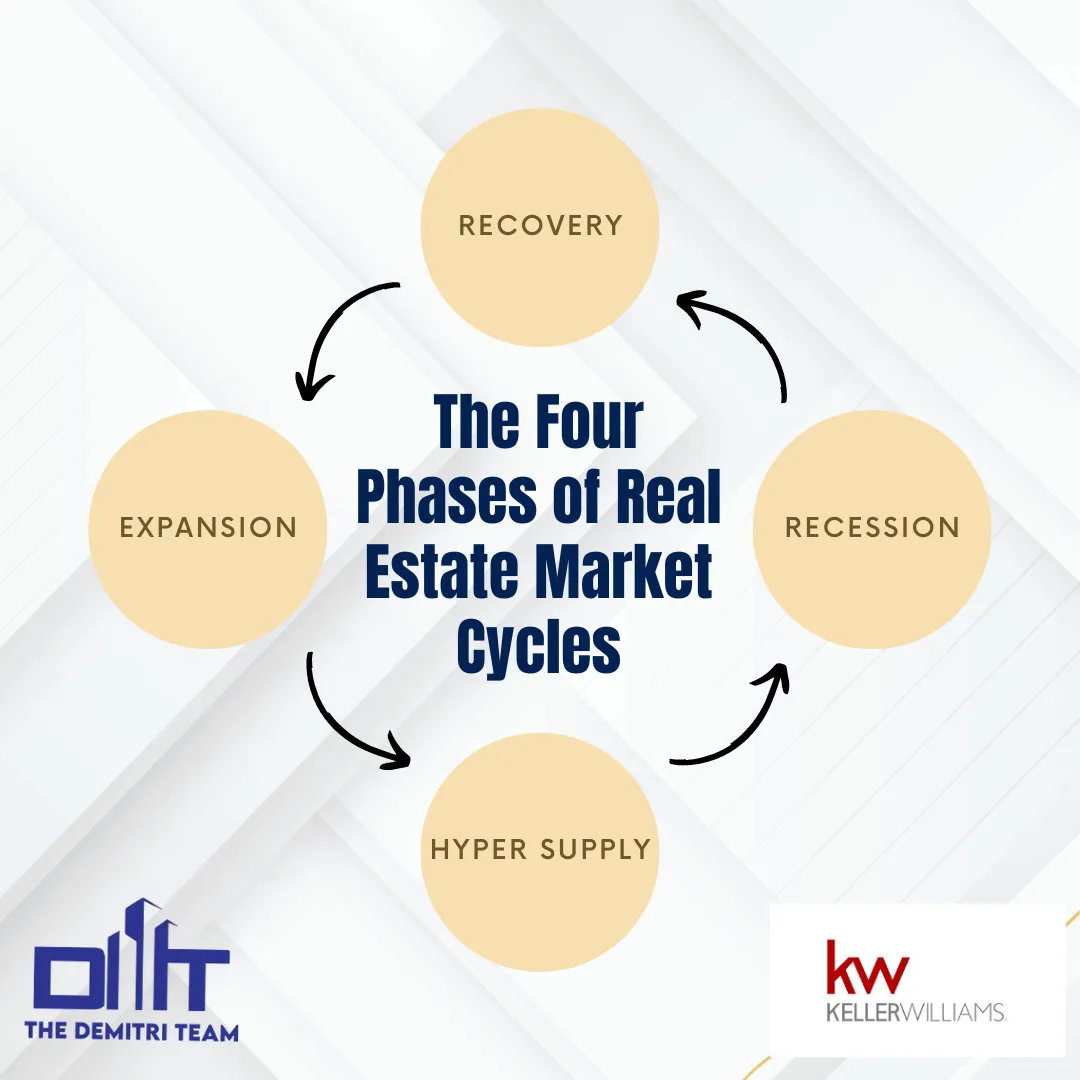
𝗧𝗵𝗲 𝗙𝗼𝘂𝗿 𝗣𝗵𝗮𝘀𝗲𝘀 𝗼𝗳 𝗥𝗲𝗮𝗹 𝗘𝘀𝘁𝗮𝘁𝗲 𝗠𝗮𝗿𝗸𝗲𝘁 𝗖𝘆𝗰𝗹𝗲𝘀
Real estate market cycles typically follow four distinct phases: Recovery, Expansion, Hyper Supply, and Recession. Each phase has unique characteristics and implications for property values, investment opportunities, and market strategies.
𝟭. 𝗥𝗲𝗰𝗼𝘃𝗲𝗿𝘆
𝗖𝗵𝗮𝗿𝗮𝗰𝘁𝗲𝗿𝗶𝘀𝘁𝗶𝗰𝘀:
Low occupancy rates and high vacancies
Stagnant or declining property values
Little to no new construction activity
During the recovery phase, the market is still reeling from the impacts of a recession. Property values are generally low, and there is a high number of vacancies. Investors may be cautious, and new construction is minimal. However, this phase also presents opportunities for savvy investors to acquire properties at lower prices, positioning themselves for future gains as the market improves.
𝗦𝘁𝗿𝗮𝘁𝗲𝗴𝗶𝗲𝘀:
Focus on distressed properties with potential for value addition
Consider long-term investments, as recovery phases can last several years
Monitor economic indicators for signs of market improvement
𝟮. 𝗘𝘅𝗽𝗮𝗻𝘀𝗶𝗼𝗻
𝗖𝗵𝗮𝗿𝗮𝗰𝘁𝗲𝗿𝗶𝘀𝘁𝗶𝗰𝘀:
Increasing occupancy rates and decreasing vacancies
Rising property values and rents
Surge in new construction and development projects
The expansion phase is marked by a robust economic environment, leading to higher demand for real estate. Occupancy rates rise, property values and rents increase, and new construction projects proliferate. This phase is often the most profitable for investors and developers, as market conditions are favorable.
𝗦𝘁𝗿𝗮𝘁𝗲𝗴𝗶𝗲𝘀:
Invest in properties to capitalize on rising values and rental income
Engage in new development projects to meet growing demand
Diversify investments to manage risks associated with potential market shifts
𝟯. 𝗛𝘆𝗽𝗲𝗿 𝗦𝘂𝗽𝗽𝗹𝘆
𝗖𝗵𝗮𝗿𝗮𝗰𝘁𝗲𝗿𝗶𝘀𝘁𝗶𝗰𝘀:
High occupancy rates but beginning to stabilize or decline
Overbuilding and excessive new construction
Slowdown in property value and rental growth
In the hyper supply phase, the market begins to show signs of oversaturation. New construction may outpace demand, leading to a stabilization or decline in occupancy rates. Property values and rents may still grow, but at a slower pace. Investors need to be cautious during this phase to avoid overpaying for properties or getting caught in a potential downturn.
𝗦𝘁𝗿𝗮𝘁𝗲𝗴𝗶𝗲𝘀:
Exercise caution in new investments, focusing on high-demand areas
Monitor market data closely to anticipate potential shifts
Prepare for a potential market correction by ensuring liquidity and flexibility
𝟰. 𝗥𝗲𝗰𝗲𝘀𝘀𝗶𝗼𝗻
𝗖𝗵𝗮𝗿𝗮𝗰𝘁𝗲𝗿𝗶𝘀𝘁𝗶𝗰𝘀:
Declining occupancy rates and rising vacancies
Decreasing property values and rents
Halt in new construction activities
The recession phase is characterized by declining market conditions. Economic downturns lead to lower demand for real estate, increasing vacancies, and decreasing property values and rents. This phase can be challenging for investors, but it also presents opportunities for those looking to acquire properties at lower prices.
𝗦𝘁𝗿𝗮𝘁𝗲𝗴𝗶𝗲𝘀:
Focus on defensive investments with stable income streams
Avoid speculative projects and prioritize cash flow
Look for distressed assets with potential for future recovery
Factors Influencing Real Estate Market Cycles
Several factors influence the different phases of real estate market cycles. Understanding these factors can help investors and professionals anticipate market changes and make informed decisions.
𝗘𝗰𝗼𝗻𝗼𝗺𝗶𝗰 𝗖𝗼𝗻𝗱𝗶𝘁𝗶𝗼𝗻𝘀
The overall state of the economy plays a significant role in real estate market cycles. Economic growth leads to increased employment, higher income levels, and greater demand for real estate. Conversely, economic downturns can reduce demand and increase vacancies.
𝗜𝗻𝘁𝗲𝗿𝗲𝘀𝘁 𝗥𝗮𝘁𝗲𝘀
Interest rates directly impact the cost of borrowing and, consequently, the affordability of real estate. Lower interest rates typically stimulate demand for properties, while higher rates can suppress it. Central banks often adjust interest rates to manage economic growth and inflation, influencing real estate cycles.
𝗚𝗼𝘃𝗲𝗿𝗻𝗺𝗲𝗻𝘁 𝗣𝗼𝗹𝗶𝗰𝗶𝗲𝘀
Government policies, including tax incentives, zoning regulations, and housing programs, can significantly affect real estate markets. Policies that promote homeownership and investment can drive demand, while restrictive policies may hinder market growth.
𝗗𝗲𝗺𝗼𝗴𝗿𝗮𝗽𝗵𝗶𝗰 𝗧𝗿𝗲𝗻𝗱𝘀
Demographic trends, such as population growth, urbanization, and changing household preferences, influence the demand for different types of properties. Understanding these trends can help investors identify emerging markets and adjust their strategies accordingly.
𝗧𝗲𝗰𝗵𝗻𝗼𝗹𝗼𝗴𝗶𝗰𝗮𝗹 𝗔𝗱𝘃𝗮𝗻𝗰𝗲𝘀
Technological advancements in construction, property management, and real estate transactions can impact market cycles. Innovations that reduce costs, improve efficiency, or enhance the appeal of properties can drive market growth and influence cycles.
𝗡𝗮𝘃𝗶𝗴𝗮𝘁𝗶𝗻𝗴 𝗥𝗲𝗮𝗹 𝗘𝘀𝘁𝗮𝘁𝗲 𝗠𝗮𝗿𝗸𝗲𝘁 𝗖𝘆𝗰𝗹𝗲𝘀
Successfully navigating real estate market cycles requires a strategic approach, informed by market data and economic indicators. Here are some tips for investors and professionals to consider:
𝗖𝗼𝗻𝗱𝘂𝗰𝘁 𝗧𝗵𝗼𝗿𝗼𝘂𝗴𝗵 𝗠𝗮𝗿𝗸𝗲𝘁 𝗥𝗲𝘀𝗲𝗮𝗿𝗰𝗵
Market research is essential for understanding current conditions and anticipating future trends. Analyze data on occupancy rates, property values, rental yields, and construction activity to gauge market health and identify opportunities.
𝗗𝗶𝘃𝗲𝗿𝘀𝗶𝗳𝘆 𝗜𝗻𝘃𝗲𝘀𝘁𝗺𝗲𝗻𝘁𝘀
Diversification can help mitigate risks associated with market cycles. Consider investing in different property types, locations, and market segments to spread risk and enhance portfolio resilience.
𝗠𝗼𝗻𝗶𝘁𝗼𝗿 𝗘𝗰𝗼𝗻𝗼𝗺𝗶𝗰 𝗜𝗻𝗱𝗶𝗰𝗮𝘁𝗼𝗿𝘀
Keep an eye on key economic indicators, such as GDP growth, employment rates, and inflation. These indicators can provide valuable insights into the broader economic environment and its potential impact on real estate markets.
𝗦𝘁𝗮𝘆 𝗜𝗻𝗳𝗼𝗿𝗺𝗲𝗱 𝗼𝗻 𝗣𝗼𝗹𝗶𝗰𝘆 𝗖𝗵𝗮𝗻𝗴𝗲𝘀
Government policies can have a significant impact on real estate markets. Stay informed about changes in tax laws, zoning regulations, and housing programs to anticipate their effects on demand and investment opportunities.
𝗙𝗼𝗰𝘂𝘀 𝗼𝗻 𝗖𝗮𝘀𝗵 𝗙𝗹𝗼𝘄
During downturns, properties with strong cash flow can provide a stable income stream and reduce financial stress. Prioritize investments in properties with reliable tenants and consistent rental income.
𝗕𝗲 𝗣𝗿𝗲𝗽𝗮𝗿𝗲𝗱 𝗳𝗼𝗿 𝗠𝗮𝗿𝗸𝗲𝘁 𝗦𝗵𝗶𝗳𝘁𝘀
Real estate market cycles are inevitable, and being prepared for market shifts is crucial. Maintain liquidity to take advantage of opportunities during downturns and ensure flexibility in your investment strategy to adapt to changing conditions.
𝗖𝗮𝘀𝗲 𝗦𝘁𝘂𝗱𝗶𝗲𝘀
Examining case studies from different market cycles can provide valuable insights into how investors and professionals navigated various phases. Let's look at a few examples:
𝗖𝗮𝘀𝗲 𝗦𝘁𝘂𝗱𝘆 𝟭: 𝗧𝗵𝗲 𝟮𝟶𝟶𝟴 𝗙𝗶𝗻𝗮𝗻𝗰𝗶𝗮𝗹 𝗖𝗿𝗶𝘀𝗶𝘀
The 2008 financial crisis had a profound impact on real estate markets worldwide. Property values plummeted, and foreclosures surged, leading to a prolonged recovery phase. Savvy investors who acquired distressed properties during the recession phase benefited from significant value appreciation during the subsequent recovery and expansion phases.
𝗖𝗮𝘀𝗲 𝗦𝘁𝘂𝗱𝘆 𝟮: 𝗧𝗵𝗲 𝗖𝗢𝗩𝗜𝗗-𝟭𝟵 𝗣𝗮𝗻𝗱𝗲𝗺𝗶𝗰
The COVID-19 pandemic caused unprecedented disruptions in real estate markets. While some segments, like office and retail, faced challenges, others, such as industrial and residential, saw increased demand. Investors who adapted quickly to changing market conditions, leveraging technology and focusing on resilient property types, navigated the crisis more effectively.
𝗖𝗮𝘀𝗲 𝗦𝘁𝘂𝗱𝘆 𝟯: 𝗧𝗵𝗲 𝗧𝗲𝗰𝗵 𝗕𝗼𝗼𝗺
The tech boom in the late 1990s and early 2000s led to rapid urbanization and increased demand for commercial real estate in tech hubs. Cities like San Francisco and Seattle experienced significant property value appreciation and construction activity. Investors who identified these trends early and invested in tech-driven markets reaped substantial rewards.
𝗖𝗼𝗻𝗰𝗹𝘂𝘀𝗶𝗼𝗻
Understanding real estate market cycles is essential for making informed decisions and maximizing investment returns. By recognizing the characteristics of each phase and the factors influencing these cycles, investors and professionals can develop strategies to navigate market shifts effectively. Conduct thorough market research, diversify investments, monitor economic indicators, stay informed on policy changes, focus on cash flow, and be prepared for market shifts to succeed in the dynamic real estate landscape.