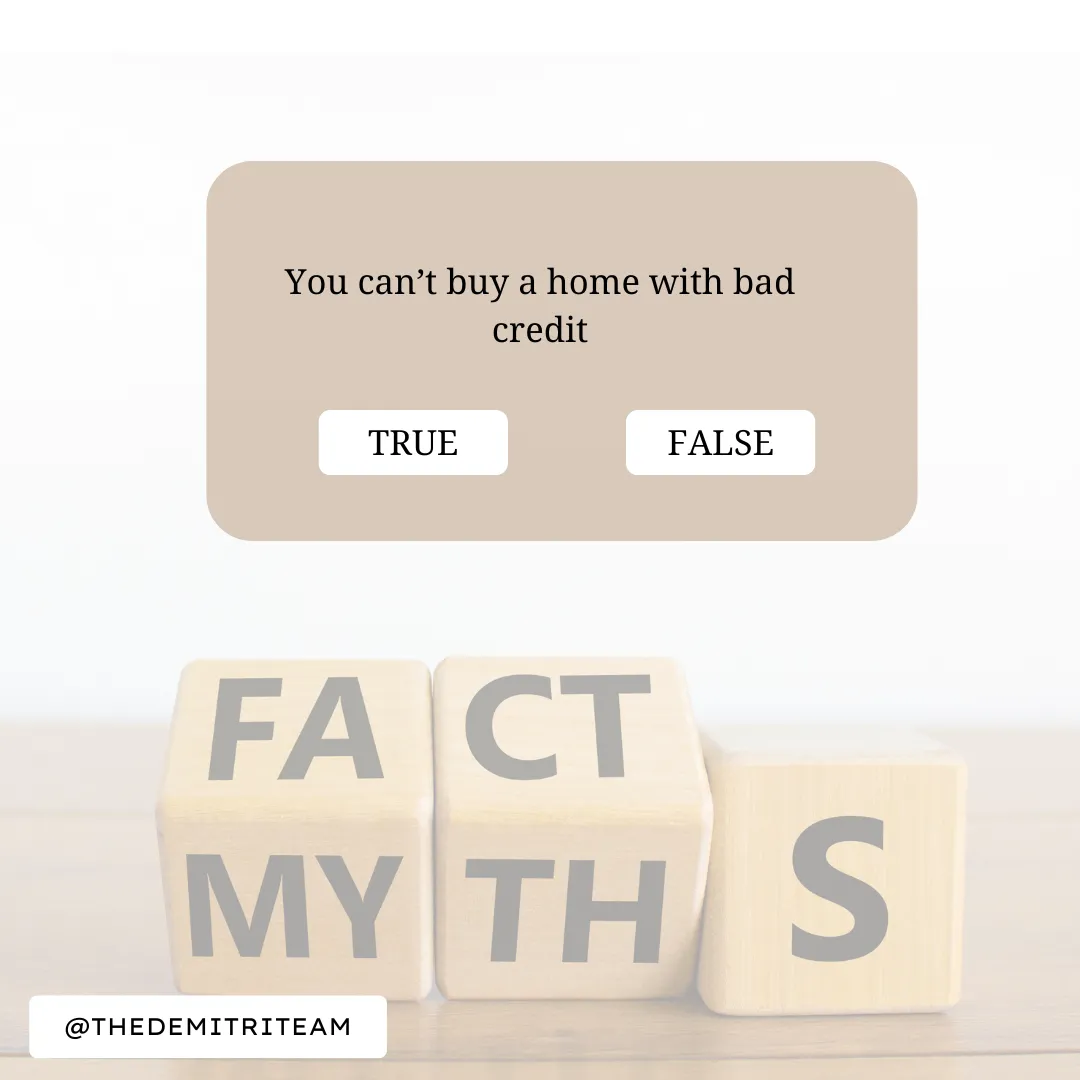
Real Estate Myth Busted: You Can’t Buy a Home with Bad Credit!
When it comes to homeownership, one of the most prevalent myths is that bad credit is a deal-breaker. Many people believe that if their credit score isn't perfect, they are automatically disqualified from buying a home. This misconception has kept countless potential buyers from even exploring their options. But here's the truth: buying a home with less-than-perfect credit is absolutely possible, and many people do it every day.
In this blog, we will debunk the myth that bad credit will prevent you from buying a home. We'll explore the various loan programs designed for buyers with lower credit scores, explain how lenders assess credit, and provide tips on how you can improve your chances of securing a mortgage, even if your credit isn't spotless.
Understanding Credit Scores and Their Impact
Before diving into how to buy a home with bad credit, it's essential to understand what a credit score is and how it affects your ability to get a mortgage.
A credit score is a three-digit number that reflects your creditworthiness. It is based on factors like your payment history, the amount of debt you owe, the length of your credit history, and any new credit inquiries. Credit scores typically range from 300 to 850, with higher scores indicating better creditworthiness.
Lenders use credit scores to assess the risk of lending you money. A higher credit score suggests that you are more likely to repay your debts on time, which makes you a more attractive borrower. Conversely, a lower score may signal that you have had financial difficulties in the past, which could make lenders hesitant to approve you for a loan.
But here's the thing: while a high credit score can certainly make it easier to qualify for a mortgage, it's not the only factor that lenders consider. And even if your credit score is on the lower side, you still have options.
Mortgage Programs for Buyers with Low Credit Scores
One of the most significant reasons why the myth that you can't buy a home with bad credit persists is a lack of knowledge about the various loan programs available to buyers with lower scores. Many potential homebuyers don't realize that there are specific types of mortgages designed to help individuals with less-than-perfect credit achieve their dream of homeownership.
1. FHA Loans
FHA (Federal Housing Administration) loans are one of the most popular options for buyers with lower credit scores. These government-backed loans are designed to make homeownership more accessible to a broader range of people, including those who may not qualify for conventional mortgages.
With an FHA loan, you can potentially qualify for a mortgage with a credit score as low as 500. However, if your score is between 500 and 579, you'll need to make a larger down payment—typically 10%. If your score is 580 or higher, you may be able to qualify with a down payment as low as 3.5%.
FHA loans are more forgiving when it comes to credit history, but they do come with some additional costs, such as mortgage insurance premiums. Still, they offer a valuable pathway to homeownership for many people who might otherwise struggle to get a mortgage.
2. VA Loans
If you're a veteran, active-duty service member, or eligible spouse, a VA (Veterans Affairs) loan could be an excellent option for you. VA loans are backed by the U.S. Department of Veterans Affairs and are known for being more lenient when it comes to credit requirements.
VA loans don't have a minimum credit score requirement set by the government. However, many lenders who issue VA loans typically look for a credit score of at least 580 to 620. The great thing about VA loans is that they often come with no down payment requirement and no private mortgage insurance (PMI), making them a highly affordable option.
3. USDA Loans
If you're interested in buying a home in a rural or suburban area, a USDA (United States Department of Agriculture) loan could be a good fit. USDA loans are designed to promote homeownership in less densely populated areas, and they are more forgiving when it comes to credit scores.
While there isn't a strict minimum credit score requirement for USDA loans, most lenders prefer a score of at least 640. One of the major advantages of a USDA loan is that you can often qualify with no down payment, which makes homeownership even more accessible.
4. Subprime Mortgages
For buyers with particularly low credit scores, subprime mortgages may be an option. These loans are specifically designed for individuals who don't qualify for conventional mortgages due to their credit history.
Subprime mortgages come with higher interest rates to compensate for the increased risk that lenders take on by offering loans to borrowers with poor credit. While the terms of subprime mortgages may not be as favorable as other loan types, they can still provide a viable route to homeownership for those with bad credit.
5. Conventional Loans with Low Credit Scores
While conventional loans are generally harder to qualify for if you have bad credit, it's not impossible. Some conventional mortgage lenders may approve borrowers with credit scores as low as 620, especially if they have a substantial down payment or a co-signer.
Conventional loans usually have stricter credit requirements and higher interest rates for borrowers with lower scores. However, if you're able to make a larger down payment, this can improve your chances of qualifying, even with a less-than-perfect credit history.
How Lenders Assess Credit Beyond the Score
While your credit score is a significant factor in the mortgage approval process, it’s not the only thing lenders consider. Many lenders take a more holistic approach to assessing your creditworthiness. Here are some additional factors they look at:
1. Debt-to-Income Ratio (DTI)
Your debt-to-income ratio is the percentage of your monthly gross income that goes toward paying your debts. Lenders use this ratio to determine whether you can afford to take on a mortgage. Even if your credit score is low, a low DTI can help boost your chances of getting approved for a loan.
2. Employment History
Lenders like to see a stable employment history because it suggests that you'll be able to make consistent mortgage payments. If you've had the same job for several years and have a reliable source of income, this can offset a lower credit score.
3. Down Payment
A larger down payment can also work in your favor if you have bad credit. By putting more money down, you're reducing the lender's risk, which can make them more likely to approve your mortgage application.
Tips for Buying a Home with Bad Credit
If you're concerned that your credit score might hold you back from buying a home, here are some tips to improve your chances of securing a mortgage:
1. Check Your Credit Report
Before you start the homebuying process, it's a good idea to review your credit report. Look for any errors or inaccuracies that could be dragging down your score, and dispute them if necessary.
2. Pay Down Debt
If possible, try to pay down some of your existing debt. Reducing your debt load can lower your DTI ratio and improve your overall creditworthiness in the eyes of lenders.
3. Save for a Larger Down Payment
As mentioned earlier, a larger down payment can help compensate for a lower credit score. Aim to save as much as you can for your down payment, as this will improve your chances of getting approved for a mortgage.
4. Work with a Mortgage Broker
A mortgage broker can help you explore different loan options and find lenders who are willing to work with borrowers with bad credit. Brokers often have access to a wide range of loan programs and can match you with one that fits your financial situation.
5. Consider a Co-Signer
If you're struggling to qualify for a mortgage on your own, consider asking a family member or friend to co-sign the loan. A co-signer with good credit can help strengthen your application and improve your chances of getting approved.
Conclusion: Don’t Let Bad Credit Stop You from Buying a Home
The myth that you can't buy a home with bad credit is just that—a myth. While having a lower credit score can make the mortgage process more challenging, it doesn't mean that homeownership is out of reach. With the right loan program, a larger down payment, and a strategic approach, you can still achieve your dream of owning a home, even if your credit isn’t perfect.